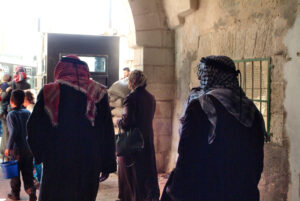
Hebron
#Reportage – West Bank
…from home page…
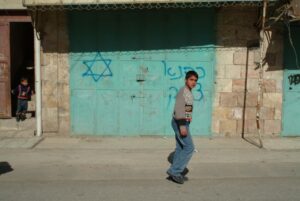
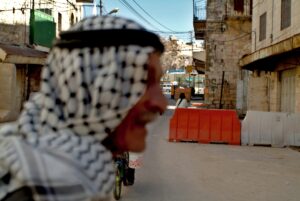
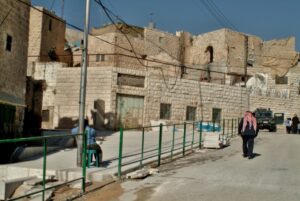
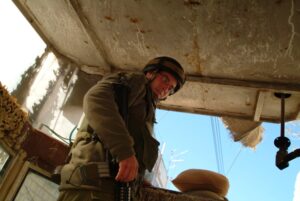
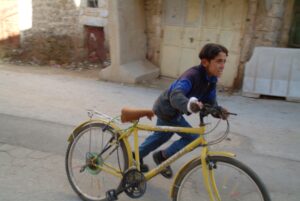
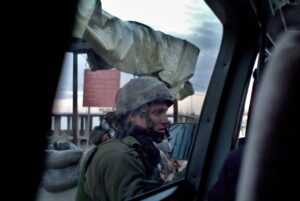
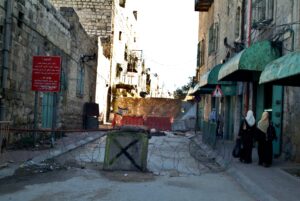
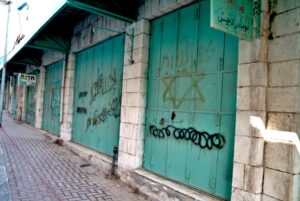
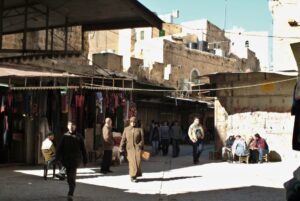
It is one of the oldest settlements in living memory, now a World Heritage Site. It’s unclear what humanity UNESCO is talking about, because Hebron is a little Jerusalem, or rather a little Israel and a little West Bank, all enclosed in a strip of land inhabited by two hundred and fifty thousand souls, held hostage by seven or eight hundred Israeli settlers who have illegally occupied the historic center. It has the sin of having been the city where Abraham used to pitch his tent next to a great oak tree, which still stands and is said to be over five thousand years old. Therefore, it is a sacred city, always contested by exponents of the two religions. I arrived in this place, of which I was unaware at the time, on the morning of December 31, 2003, with a group of photographers in their early thirties from the “Graffiti” photography school in Rome, directed today as then by my friend and photographer Gianni Pinnizzotto. A small group of about fifteen people armed only with cameras and an insatiable hunger for knowledge. On the city’s deserted main avenue, a tall, almost swaying, bearded figure approaches us. Speaking English with a perfect American accent, he asks something like, “What are you doing in here?” I reply that we’re students at an Italian photography school. He replies, amused and perplexed, “You must be crazy,” and sways away. The shops that once belonged to Arabs have been expropriated by the Israelis, and as evidence of this, the shutters of many of them have been spray-painted with enormous Stars of David and Hebrew writings whose meaning I don’t know, but I can imagine. Aside from several sentry boxes manned by heavily armed young soldiers, almost no one is visible outside. We approach a crossing to enter the historic center, and a van of Israeli soldiers stops us, asking where we’re headed. After explaining, they tell us bluntly that there are numerous snipers on the rooftops above, and that for our own safety, we should wear a kippah to distinguish ourselves from the Arabs. They hand us a white cardboard kippah, with a circle on the edge and a prominent Star of David in the center, both blue. One for each of us. We put it on and walk into the town center, where the shops, now closed, were once open, and the commercial activity was frenetic. We immediately notice that above the shops, the Palestinians have set up nets, which are full of garbage—garbage that the Israeli settlers who have occupied the homes on the upper levels regularly dump in large quantities downstairs, where the Palestinians still live, who, despite this, are still resisting. Often, they tell us, feces and urine also come down from above. No one enters or leaves the city without the strict control of the Israeli military. This is Hebron. Around 2004. You can imagine what it’s like now.
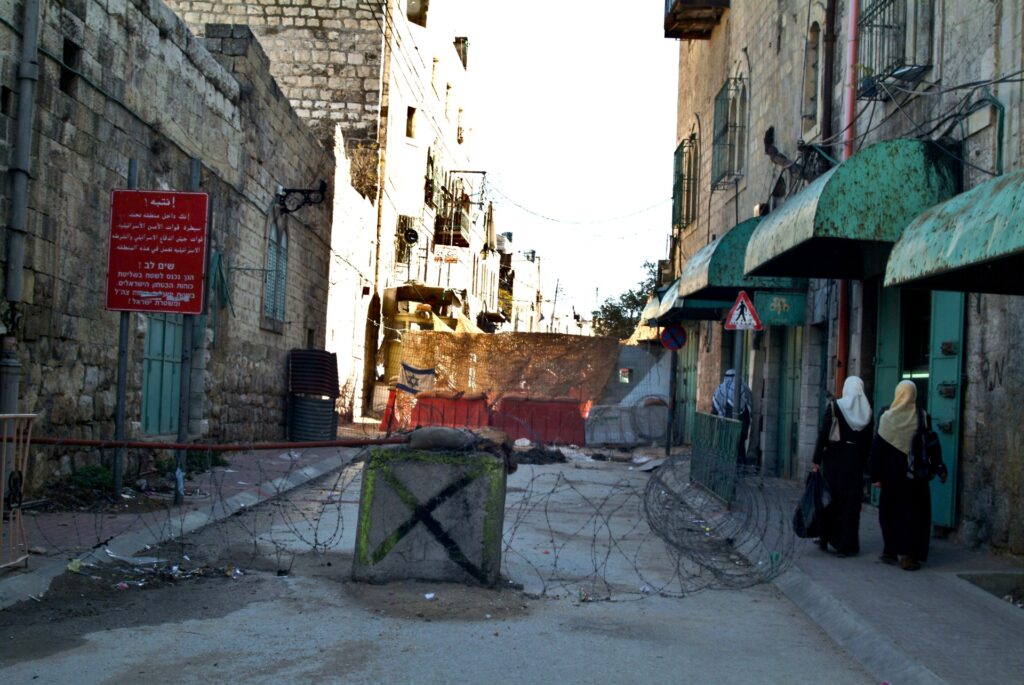
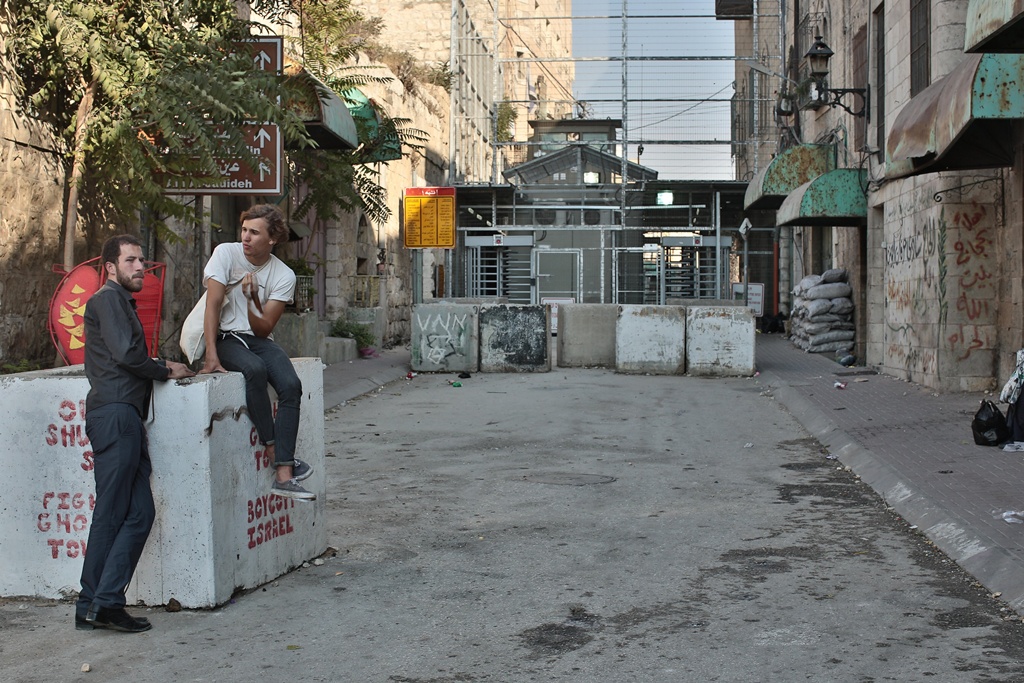
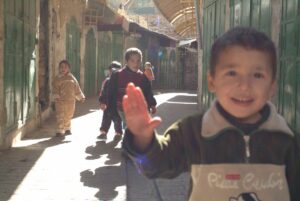
December 31, 2003, photo by Fabio Ancora
August 26, 2026
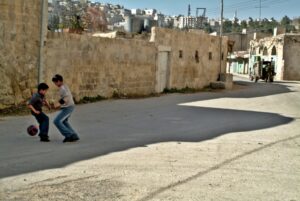
The photographs shown below were taken in late 2003. Since then, Israeli settlers’ intrusiveness and violence toward the Palestinian population has progressively increased, leading to the tragic and dangerous situation highlighted in recent news reports. Many of the violent incidents, some of which have resulted in injuries and deaths, including among women and children, were committed by Israeli settlers, with the tacit or explicit approval of the Israeli army and governments, which never intervened to stop the incursions, instead backing the attackers.