Infopollution
#socialphotography
Transformed digital images
“Only two things are infinite: universe and human stupidity, but I am not sure about the former” (Albert Einstein)
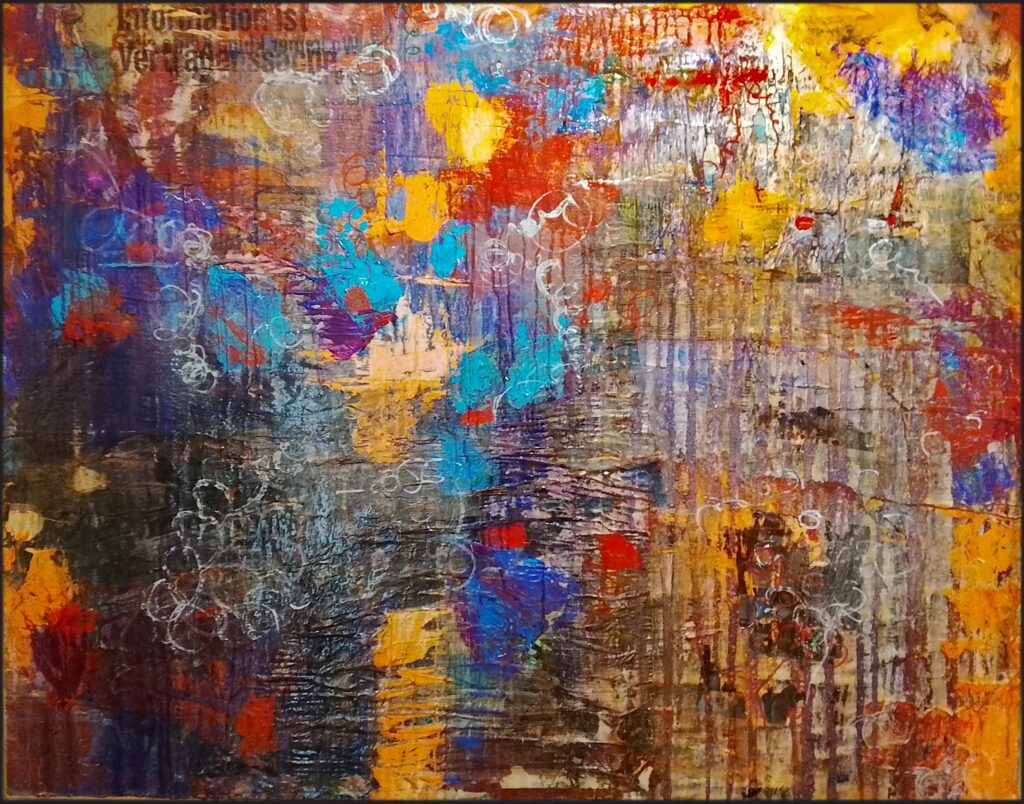
Since the beginning of the current century, we have been witnessing an exponential growth of digital processes, which now regulate, influence and increasingly dominate, for better or for worse, everyday life. Since the birth of the Internet, the network of networks, in the now distant 1992, with which the end of control over information and the absolute absence of checks on the contents generated by contributors to the global network were announced to the world, things have changed drastically today and, precisely the absence of controls, has allowed a limited number of players to generate applications, the Social, which have become a powerful means of social control, and which are able to influence and modify, through sophisticated algorithms that propose to users only certain information selected on the basis of their preferences, the behaviors and opinions of billions of people. Therefore, the Internet, as it was conceived and designed by Tim Berners-Lee, ramains a utopia. The latest frontier of mystification by a few to the detriment of many is represented in the unscrupulous and uncontrolled use of Artificial Intelligence. Many of the researchers and engineers who were the fathers of AI today cry out in vain about the intrinsic danger it could have. In this panorama, public opinion is increasingly disoriented. Everyone, even those equipped with the best cognitive tools, struggle to form an opinion based on a given piece of reality. Excessive pluralism, in the absence of a government of the information flow that certifies its sources, becomes harmful and does not allow us to have an opinion formed by multiple degrees. To simplify, and participate, in the end, we are simply forced to decide which side to be on. Among one idea or its exsact opposite the nuances that are in between and that in the past moderated our judgments no longer matter. In short, our judgment, often compulsive, is reduced exclusively to “like” or “unlike”.I have called this phenomenon “Infopollution”. Art, today, cannot help but deal with this. In this case I chose to do it through photography. Until a few years ago, a photograph represented, without a shadow of a doubt, a fact. In its brief history, we remember many shots that changed the course of events. I.e. the photo of the naked Vietnamese girl fleeing from a village burned by Napalm taken by Nick Ut on June 8, 1972, which earned him the Pulitzer, contributed to the end of the Vietnam War. Today, a similar photo, or one that wanted to demonstrate the exact opposite, could be produced with generative Artificial Intelligence. The invasiveness of algorithms is prevailing over reality, altering and modifying it at use of a fews. There is a progressive and exponential pollution of information and reality by algorithms and those who manage them. Are we really sure we want this?